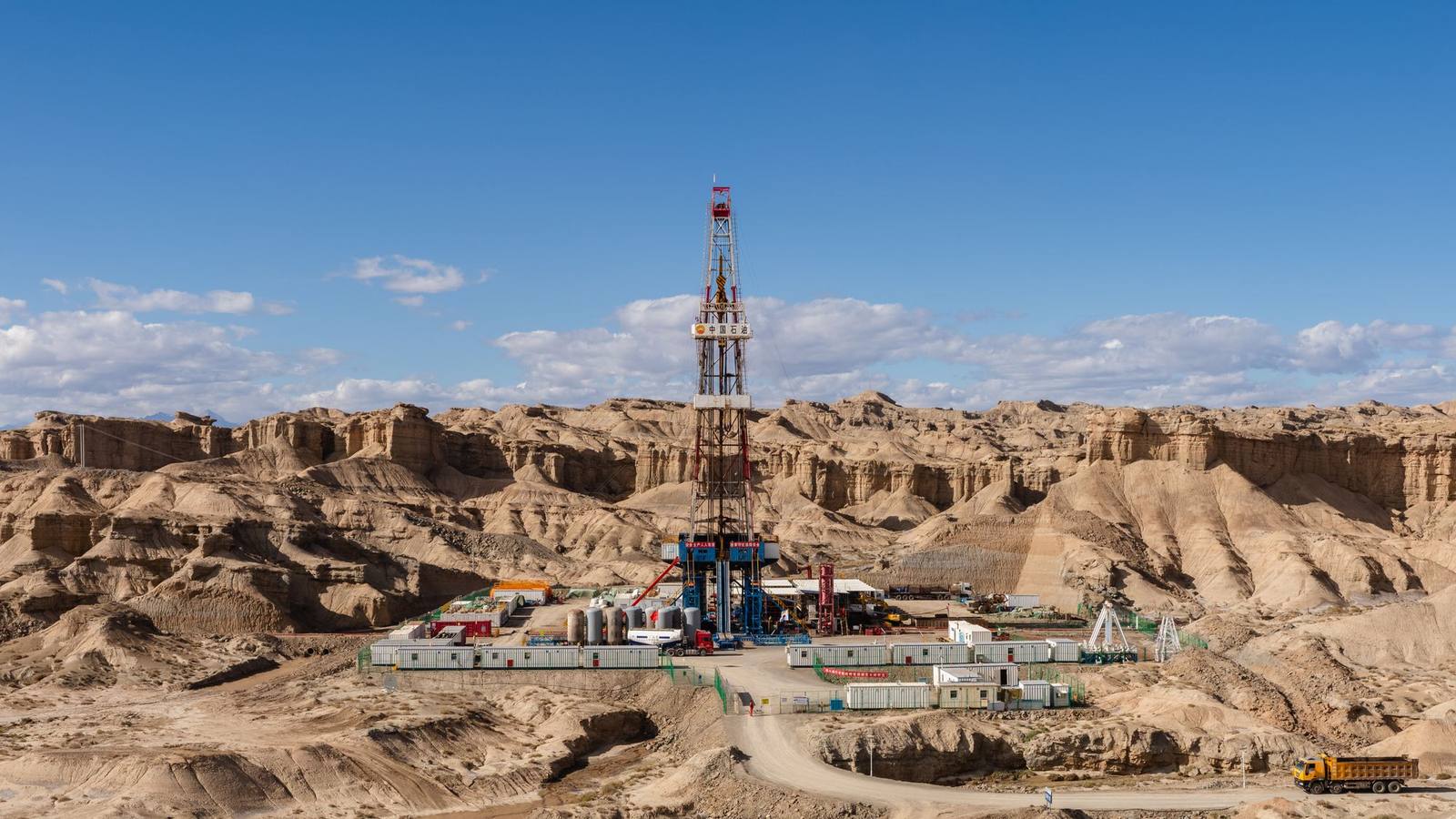
A roughneck salary is the starting point of one of the oil industry’s clearest career ladders. Most drilling careers begin as a roustabout or roughneck (also called a floorhand), then move up to derrickman, assistant driller, driller, toolpusher and finally rig manager. In the United States, official data for May 2025 puts the median pay at $46,960 for roustabouts, $58,620 for derrick operators and $67,890 for rotary drill operators (drillers). Supervisors earn much more: real job ads on RigJobsDirect in October 2026 showed drillers from $40 an hour and a rig manager from $135,000 a year.
This guide walks through each step, what it pays, the training you need to move up, and where the jobs are. Pay depends heavily on country, onshore or offshore work, rotation and overtime, so treat every number as a guide.
The drilling career ladder at a glance
| Step | Also called | Main job | Typical next step |
|---|---|---|---|
| Roustabout | Leasehand, labourer | General labour around the rig and site | Roughneck |
| Roughneck | Floorhand | Handling pipe and equipment on the drill floor | Derrickman |
| Derrickman | Derrickhand | Works up the derrick racking pipe; looks after mud pumps and drilling fluid | Assistant driller |
| Assistant driller | AD | Supports the driller and leads the floor crew | Driller |
| Driller | Rotary drill operator | Operates the rig’s drilling controls and leads the crew | Toolpusher |
| Toolpusher | Tool pusher, night or day pusher | Supervises the rig crews on shift | Rig manager |
| Rig manager | Senior toolpusher, OIM (offshore) | In charge of the whole rig | Superintendent, operations roles |
Job titles vary between companies and countries. Offshore rigs often also have crane operators, mechanics, electricians and subsea engineers, each with their own ladder.
The US Bureau of Labor Statistics confirms how people usually start: roustabout jobs “typically do not require experience to enter” and give experience needed for other jobs, such as derrick operators and drillers. BLS adds that experienced roustabouts may be called roughnecks (BLS).
Roustabout and roughneck salary
What official data says
BLS data for the US, May 2025 (BLS):
| Occupation | Median annual pay | Jobs (2025) |
|---|---|---|
| Roustabouts | $46,960 | 45,500 |
| Service unit operators | $58,160 | 43,800 |
| Derrick operators | $58,620 | 10,700 |
| Rotary drill operators | $67,890 | 12,700 |
| All oil and gas workers | $51,650 ($24.83 an hour) | 112,700 |
BLS lists no formal education requirement for oil and gas workers, though some employers prefer a high school diploma. It notes that most work full time, some more than 40 hours a week, and that crews on offshore rigs or in remote areas may spend weeks away from home working long shifts seven days a week (BLS). Overtime is a large part of pay on many land rigs, so annual earnings can be well above the median.
What job ads show
Many US employers now publish pay in their ads. On RigJobsDirect in October 2026, drilling and well service ads included:
| Job (employer, location) | Pay in the ad |
|---|---|
| Entry level oilfield operator, wireline (Halliburton, Fort Lupton) | $16 an hour |
| Operator assistant, cementing (Halliburton, Fort Lupton) | $18 an hour |
| Bulk material operator, cementing (Halliburton, Bakersfield) | $18 to $33 an hour |
| Drilling rig jobs, Rocky Mountain division (Precision Drilling, Brighton) | $31 an hour |
| Drilling rig jobs (Precision Drilling, Edmonton, Canada) | Up to $5,000 a month |
| Driller, Lower Rockies (Patterson-UTI, Fruita) | From $40 an hour |
| Rig manager, Colorado and Utah (Patterson-UTI, Fruita) | From $135,000 a year |
Browse current drilling and wells jobs; 358 were open on 16 October 2026.
Derrickman salary
The derrickman works high on the derrick (the “monkey board”) racking pipe during trips, and usually also looks after the mud pumps and drilling fluid system. It is the first step that needs real skill and trust, and the pay jump shows it: BLS puts US derrick operators at a median of $58,620 in May 2025, about $11,700 more than roustabouts.
Searches like “derrickman salary in Kuwait” or “derrickman salary in ADNOC” have no official public answer. Gulf drilling contractors set pay per contract, often as a monthly salary plus allowances, usually on rotation. For how Gulf packages are built and taxed, see our guide to Gulf oil and gas salaries and benefits.
Driller salary
The driller runs the drilling controls and leads the floor crew on shift. BLS reports a median of $67,890 for US rotary drill operators in May 2025. Job ads with stated pay, such as Patterson-UTI’s driller role at “from $40 an hour”, suggest experienced land drillers with overtime can earn well above that median.
Driller roles seen on RigJobsDirect in the weeks before 16 October 2026 included Patterson-UTI in the Permian Basin and East Texas, Nabors in North Dakota, Expand Energy in Mansfield and Morgantown, Seadrill offshore Angola, ADES in Indonesia, and Helmerich & Payne (including KCA Deutag) in Saudi Arabia.
Directional drillers are a different path
A directional driller works for a service company, not the rig contractor, and steers the well along its planned path. Halliburton’s Sperry Drilling, for example, advertised a directional driller role in Brazil. It is often reached through a field engineer or MWD route rather than up the rig crew ladder. See our guide to field engineer jobs at SLB, Halliburton and Baker Hughes.
Toolpusher salary
The toolpusher supervises the rig crews and reports to the rig manager. Offshore rigs and big land rigs have a day toolpusher and a night toolpusher. There is no BLS category for toolpushers alone, but a supervisor’s pay sits between a driller’s and a rig manager’s. As one real data point, Patterson-UTI advertised a rig manager role in Colorado and Utah from $135,000 a year in October 2026.
Toolpusher ads on RigJobsDirect in the weeks before 16 October 2026 came from ADES (day and night toolpusher in Qatar and Indonesia), Seadrill (Angola) and Valaris. Offshore toolpushers often work fixed rotations; our guide to rotation schedules explains common patterns.
The tickets you need to move up
Before your first job
- Safety orientation. IADC RigPass is a standardised safety orientation for new rig employees, for onshore and offshore work, and is independently accredited (IADC). Many employers run it for new hires.
- Offshore safety training for offshore rigs, such as OPITO BOSIET, which is for people new to offshore work (OPITO). See our offshore safety certificates guide.
- A medical and a drug and alcohol test.
Well control: the key to promotion
Well control certification follows the ladder closely. IWCF recommends (IWCF):
| IWCF level | Recommended for | Valid for |
|---|---|---|
| Level 2 | Well-site roles whose action could affect well control (for example floor crew and derrickmen) | 5 years |
| Level 3 | Equipment operators who act to prevent or respond to well control incidents; assessed as the driller | 2 years |
| Level 4 | Supervisors; assessed as the supervisor who instructs the driller | 2 years |
Level 3 and Level 4 courses include a practical assessment. IADC’s WellSharp is the other main well control scheme, accredited by the drilling contractors’ association (IADC). Your employer usually decides which scheme and level you need, and often pays for it once you are in line for promotion.
How long does it take to move up?
There is no fixed timetable. Promotion depends on rig activity, vacancies on your crew, your record and your certificates. In busy markets people can move from floorhand to derrickman quickly; in a downturn, crews shrink and promotion stalls. Practical ways to move faster:
- Learn the next job. Ask to relieve the derrickman or assistant driller when they are off.
- Keep a clean safety record. Supervisors pick people they trust.
- Get your well control certificate at the right level before the vacancy appears, if your employer allows it.
- Be mobile. Being willing to move between rigs, regions or countries opens more vacancies.
Where the drilling jobs are
Drilling contractors with jobs on RigJobsDirect include Nabors, Transocean and Valaris, alongside land drillers such as Patterson-UTI and Precision Drilling. For US land rigs, start with Midland (107 energy jobs on 16 October 2026) and Houston (579). For FIFO rig work in Australia, see our guide to FIFO and oil and gas jobs in Australia.
Frequently asked questions
How much does a roughneck make?
In the US, BLS reports a median of $46,960 a year for roustabouts in May 2025; experienced roustabouts are often called roughnecks. Job ads in October 2026 showed rig crew pay from about $16 to $33 an hour, with overtime on top.
What is the difference between a roustabout and a roughneck?
A roustabout does general labour around the rig and site. A roughneck (floorhand) works on the drill floor handling pipe. BLS notes that experienced roustabouts may be called roughnecks.
How much does a driller earn?
BLS reports a median of $67,890 for US rotary drill operators in May 2025. A Patterson-UTI driller ad in 2026 offered from $40 an hour.
What does a toolpusher do?
The toolpusher supervises the rig crews and the drilling work on shift and reports to the rig manager. Large rigs have a day and a night toolpusher.
Which well control certificate does a driller need?
IWCF recommends Level 3 for equipment operators such as drillers and Level 4 for supervisors such as toolpushers. Both are valid for 2 years. Some employers use IADC WellSharp instead.