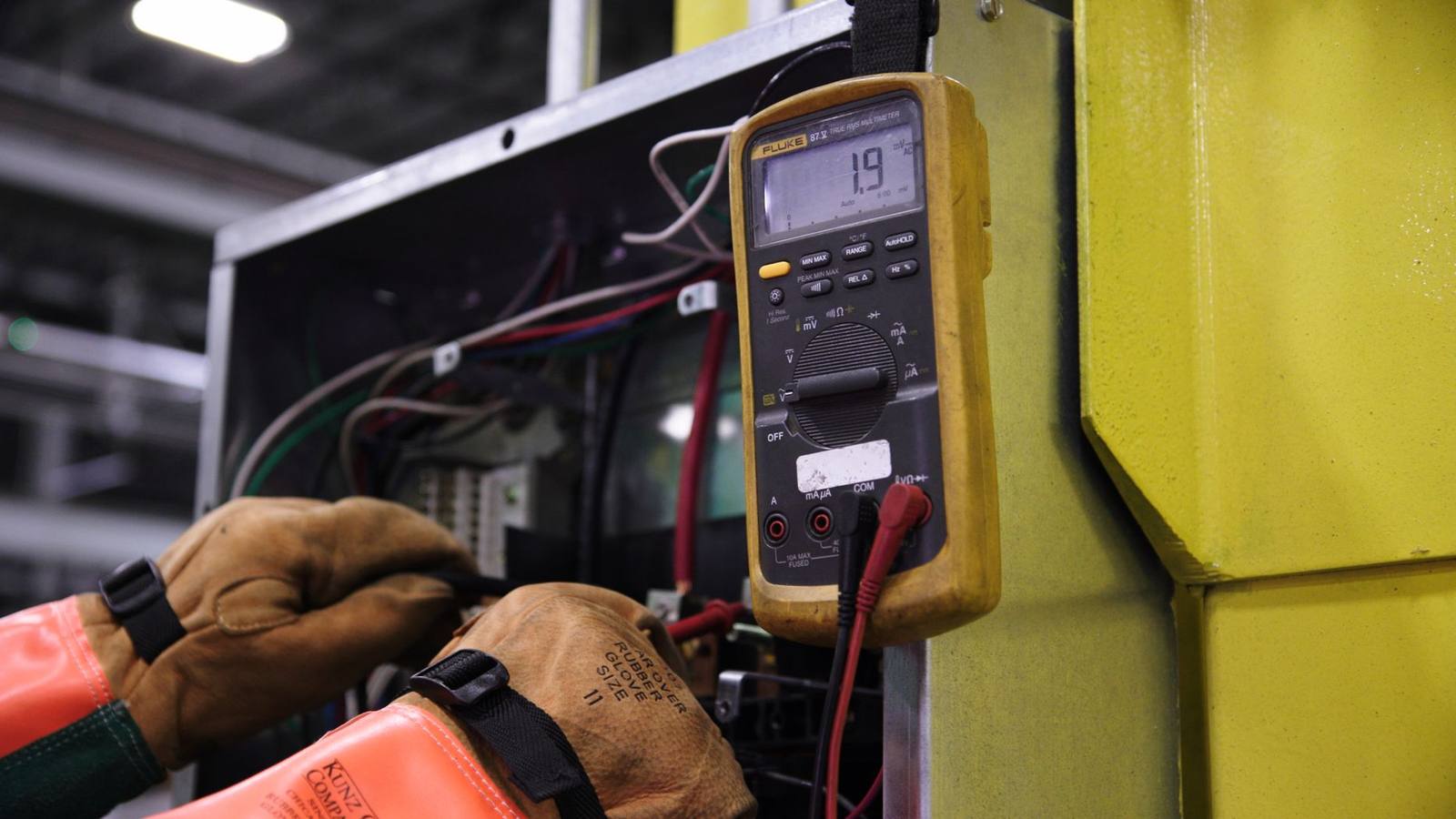
Electrical and commissioning engineer jobs in oil and gas often ask for CompEx or IECEx certification. Both show that you can work safely with electrical equipment in explosive atmospheres, the “hazardous areas” around gas, vapour and dust. CompEx is a UK-based scheme. IECEx is the international scheme run under the IEC: its Certificate of Personnel Competence (CoPC) has 12 units of competence and you are re-assessed every 5 years (IECEx). Always check which scheme and which units the employer asks for before you pay.
This guide explains hazardous areas, the certificates, what electrical and commissioning engineers do in oil and gas, what they earn, and where the jobs are.
What a hazardous area is
Refineries, gas plants, LNG terminals and offshore platforms have areas where a flammable gas, vapour or dust could be present. Electrical equipment there must not become an ignition source. In Great Britain, the Dangerous Substances and Explosive Atmospheres Regulations (DSEAR) require employers to “identify and classify areas of the workplace where explosive atmospheres may occur and avoid ignition sources” such as unprotected equipment, and to train employees to deal with the risks (HSE).
The European ATEX rules split the subject in two: one directive covers workers’ safety and the other covers equipment and protective systems for use in explosive atmospheres. Areas are classified into zones depending on how likely an explosive atmosphere is and how long it would last (HSE ATEX).
That is why oil and gas employers want proof that electricians, instrument technicians and engineers know how to select, install, inspect and maintain explosion-protected (“Ex”) equipment.
IECEx Certificate of Personnel Competence
The IECEx Certified Persons Scheme lets people who work in or around hazardous areas get a Certificate of Personnel Competence (CoPC). Key facts from IECEx:
- Assessment, not training. An IECEx Certification Body (ExCB) assesses you with written and practical assessments for each unit. IECEx says “completion of training does not guarantee a person’s competence”, and a training provider’s record of training is not an IECEx certificate (IECEx FAQ).
- Validity. You are re-assessed every 5 years to keep the CoPC.
- Verification. Certificates are published on the IECEx online certificate system, where employers can check them.
- Not a passport. IECEx says a CoPC does not automatically give you access to a site, industry or country.
IECEx units of competence
| Unit | What it covers |
|---|---|
| Ex 000 | Basic knowledge and awareness to enter a classified hazardous area |
| Ex 001 | Apply basic principles of protection in explosive atmospheres |
| Ex 002 | Perform classification of hazardous areas |
| Ex 003 | Install explosion-protected equipment and wiring systems |
| Ex 004 | Maintain equipment in explosive atmospheres |
| Ex 005 | Overhaul and repair explosion-protected equipment |
| Ex 006 | Test electrical installations in or associated with explosive atmospheres |
| Ex 007 | Visual and close inspection of those installations |
| Ex 008 | Detailed inspection of those installations |
| Ex 009 | Design installations in or associated with explosive atmospheres |
| Ex 010 | Audit inspection of those installations |
| Ex 011 | Basic knowledge of the safety of hydrogen systems |
Source: IECEx. Not every certification body assesses every unit; the list of certification bodies shows each one’s scope, with bodies in countries including Australia, Brazil, Canada and France.
Electricians and instrument technicians on site usually need units such as Ex 001, Ex 003, Ex 004 and the inspection units. Design engineers add Ex 009, and people who classify areas add Ex 002.
CompEx certification
CompEx is a competence scheme for working in explosive atmospheres that started in the UK. Its official website is compexcertification.com. The site blocked our automated checks while we wrote this guide, so we have not quoted its unit list, prices or validity period here. Before you book:
- Check the unit codes the employer’s ad asks for, and that the training centre is an approved CompEx centre.
- Ask how long the certificate lasts and how renewal works.
- Ask the employer whether it accepts IECEx CoPC as well as, or instead of, CompEx.
CompEx certification cost in India, Qatar and Kerala
Prices are set by the approved centres and vary by country and unit, so get a written quote that includes the assessment. Be careful with anyone offering a certificate without a practical assessment: IECEx certification is based on written and practical assessment, and employers check certificates. Our guide to recruitment scams covers fake certificate offers.
Is there CompEx certification online?
Theory can sometimes be studied online, but hazardous area competence schemes include practical assessment of your skills, as IECEx’s own rules show. Treat a fully online “certificate” with caution and check it is accepted by the employer.
Electrical engineer in oil and gas: what the job involves
Electrical engineers in oil and gas work on power generation and distribution (gas turbines, switchgear, transformers), motors and drives, cathodic protection, lighting and small power in hazardous areas, and electrical safety studies. Typical tasks include:
- Load flow, short circuit and protection studies.
- Specifying and reviewing hazardous area equipment and certificates.
- Reviewing vendor documents and factory acceptance tests.
- Supporting construction, then pre-commissioning and commissioning.
- Operations support, maintenance strategies and inspections.
Electrical engineer oil and gas interview questions
Expect questions on protection coordination, earthing, motor starting, transformer and switchgear testing, hazardous area classification and Ex protection concepts, permits to work and lockout, and a recent problem you solved on site.
Commissioning engineer jobs
Commissioning engineers prove that a newly built plant works safely before it is handed over to operations. The work moves through stages:
- Mechanical completion: checking that systems are built to drawings.
- Pre-commissioning: cold tests such as insulation resistance, loop checks, flushing and pressure testing.
- Commissioning: energising systems and running equipment with utilities, then process fluids.
- Start-up and performance testing, then handover.
Electrical, instrumentation and mechanical commissioning engineers often travel from project to project. Jobs can involve rotations or long site assignments, and electrical and instrument ads may ask for CompEx or IECEx units.
Electrical engineer oil and gas salary
US Bureau of Labor Statistics figures for May 2025 (BLS), pulled from the BLS public data API:
| Role | Annual mean |
|---|---|
| Electrical engineers, US | $125,100 |
| Electrical engineers, Houston metro | $135,160 |
| Electrical engineers, Midland metro | $141,500 |
| Electricians, US (all industries) | $71,490 |
| Electricians in drilling and oilfield services | $76,110 |
The last line uses the industry “support activities for mining” (BLS). These are straight-time averages without overtime. For more Texas figures, see our guide to oil and gas salaries in Houston and the Permian.
On RigJobsDirect on 16 October 2026, 322 of the 1,693 electrical jobs stated a yearly salary, and most were between $69,000 and $198,000. For construction and commissioning jobs, 142 of 1,220 stated a salary, mostly $75,000 to $245,000.
We did not find official salary statistics for electrical or commissioning engineers in Qatar, the UAE or Saudi Arabia. Gulf pay is usually tax-free and split into basic salary and allowances; see our guide to Gulf oil and gas salaries and benefits.
Where the jobs are
On RigJobsDirect on 16 October 2026:
| Location | Electrical jobs | Construction and commissioning jobs |
|---|---|---|
| Worldwide | 1,693 | 1,220 |
| Houston | 54 | 47 |
| Abu Dhabi | 25 | 48 |
| Chennai | 41 | 16 |
| Singapore | 12 | 15 |
London had 18 electrical jobs and Pune 23. For Qatar, see all energy jobs in Qatar. We also listed 545 instrumentation and control jobs, many of which need the same hazardous area units. 57 of the electrical jobs stated visa sponsorship.
How to get into electrical and commissioning work in oil and gas
- Get qualified as an electrician or electrical engineer in your home country.
- Gain plant experience: industrial, power, utilities or petrochemical.
- Get the hazardous area units your target employers ask for (CompEx or IECEx).
- Add offshore training if you want offshore work; see our guide to offshore safety certificates.
- Apply to EPC contractors, commissioning specialists and operators, and keep your certificates valid.
Certification rules, prices and pay change. This guide is general information, so check the official links and the employer’s requirements before you pay for a course.
Frequently asked questions
What is CompEx certification?
A competence scheme, started in the UK, for people working with electrical equipment in explosive atmospheres. Check the official CompEx site and the job ad for the units and validity that apply.
What is the difference between CompEx and IECEx?
IECEx is the international scheme run under the IEC, with 12 units of competence assessed by IECEx certification bodies and re-assessment every 5 years. CompEx is a separate UK-based scheme. Some employers accept either, some ask for one by name.
How long is an IECEx Certificate of Personnel Competence valid?
IECEx says holders are re-assessed every 5 years to keep the certificate.
What do commissioning engineers do?
They check and test a new plant system by system, from mechanical completion and pre-commissioning tests to energising equipment, start-up and handover to operations.
What do electrical engineers in oil and gas earn?
In the US, electrical engineers averaged $125,100 a year in May 2025, and $135,160 in the Houston metro area (BLS). Electrical job ads on RigJobsDirect that stated pay mostly offered $69,000 to $198,000 a year.
Can I get CompEx certification online?
Theory may be offered online, but hazardous area schemes include practical assessment. Be cautious with fully online certificates and check that your employer accepts them.