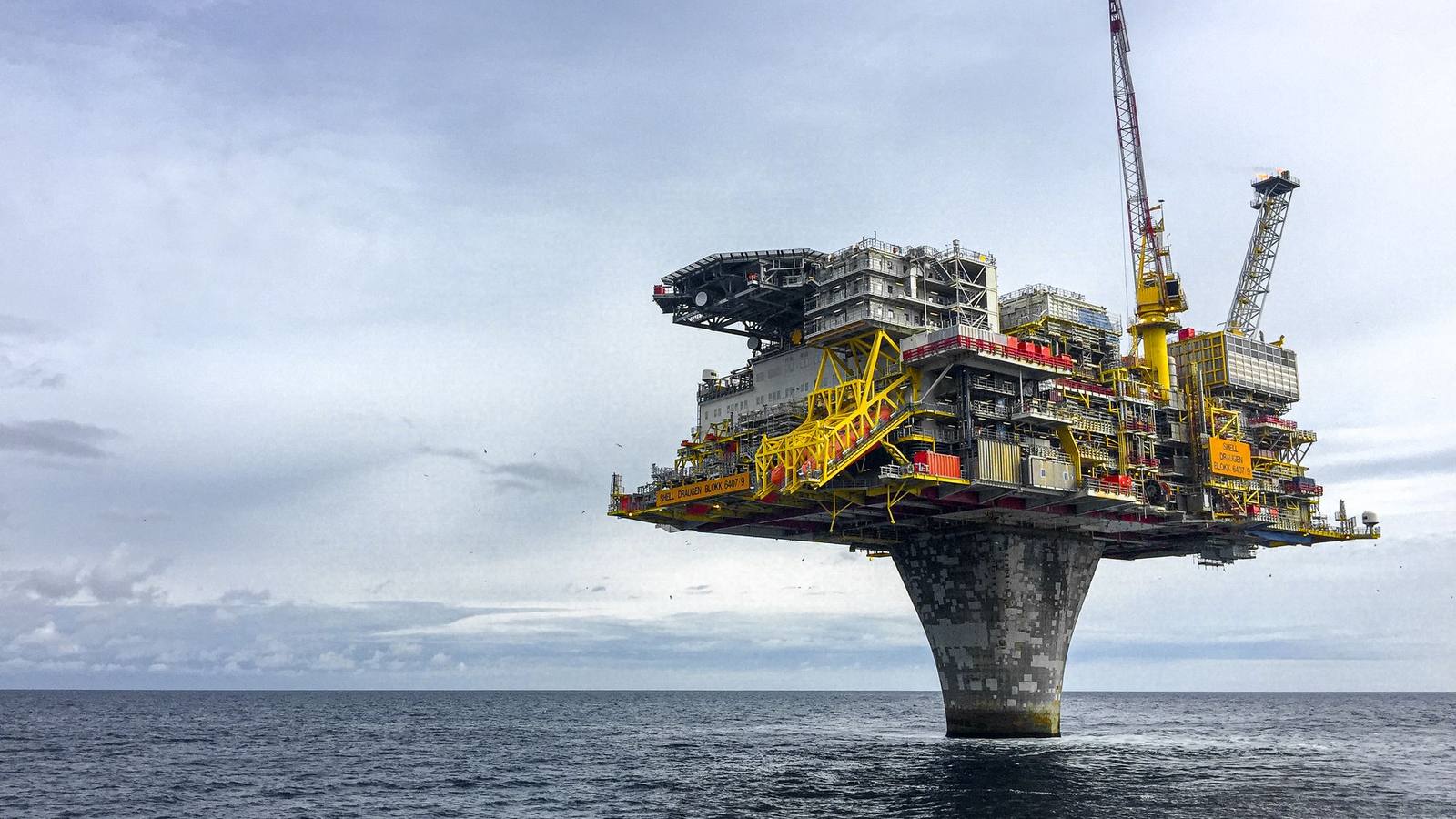
North Sea jobs are split between two very different systems. In the UK sector, run from Aberdeen, you usually need OPITO BOSIET safety training, the UK MIST course and an OEUK offshore medical, and from 1 November 2026 a clothed weight of no more than 124 kg. In the Norwegian sector, everyone on an installation needs the Offshore Norge basic safety course (GSK) refreshed every four years, though UK, Dutch and Danish training is accepted under a North Sea agreement. Either way, you also need the right to work in the country.
This guide explains the training, medical and visa rules for both countries, what North Sea jobs pay, whether they are dangerous, and how to find work, including with no experience.
UK and Norway at a glance
| UK North Sea | Norwegian continental shelf | |
|---|---|---|
| Main hub | Aberdeen | Stavanger, Bergen |
| Basic safety training | OPITO BOSIET, then FOET every 4 years | Offshore Norge GSK, refresher every 4 years |
| Extra new-starter course | OPITO MIST | Operator inductions |
| Offshore medical | OEUK medical certificate | Standard OEUK certificate generally accepted by agreement |
| Weight limit | 124 kg clothed, from 1 November 2026 | Ask the operator |
| Safety regulator | Health and Safety Executive (HSE) | Havtil (Norwegian Ocean Industry Authority) |
| Work rights for non-nationals | UK visa, for example Skilled Worker | EU/EEA rules, or a UDI residence permit |
| Jobs on RigJobsDirect, 16 October 2026 | 609 in the UK, 98 in Aberdeen | 63 in Norway |
Working in the UK North Sea
Safety training: BOSIET and MIST
Almost every UK offshore job asks for the OPITO BOSIET course (with EBS, an emergency breathing system for helicopter travel). It takes about 21 guided learning hours, and you must complete the refresher, FOET, within 4 years (OPITO BOSIET).
New starters also complete OPITO MIST, the Minimum Industry Safety Training standard: five units covering major accident hazards, workplace hazards, risk management, control of work and helicopter safety, deliverable over two days and valid for 4 years (OPITO MIST). Our guide to offshore safety certificates explains the tropical versions and how to check a certificate is real.
The OEUK offshore medical
UK offshore workers need a medical certificate from a doctor registered with Offshore Energies UK. OEUK tells employers to check that the examining doctor is on its register (OEUK).
The 124 kg weight limit
OEUK’s Safe Weight Limit Policy sets a maximum clothed weight of 124 kg, including a 0.7 kg margin, measured in seasonal travel clothing and shoes. The policy started with an awareness phase on 1 November 2025 and a transition from 1 February 2026. From 1 November 2026, workers over 124 kg cannot travel offshore. It applies to installations operating under accepted Safety Cases, not to marine vessels, and it is based on what a search and rescue helicopter winch can lift (OEUK).
Visas for the UK
If you are not a UK citizen and do not already have the right to work, the usual route is the Skilled Worker visa. You need a job offer from an approved sponsor and an eligible occupation, and you will usually need to be paid at least £41,700 a year or the going rate for the job, whichever is higher (GOV.UK). The application fee from outside the UK is £819 per person for up to 3 years and £1,618 for longer, plus the healthcare surcharge (GOV.UK).
GOV.UK notes that some construction jobs are not eligible: bricklayers and carpenters are, construction labourers are not. Many offshore entry roles, such as roustabouts, are unlikely to meet the skill and salary rules, so sponsorship is mostly realistic for engineers and experienced specialists. On 16 October 2026, 13 of the 609 UK jobs on RigJobsDirect said they offered visa sponsorship. See all energy jobs with visa sponsorship.
The regulator
Offshore health and safety in the UK is regulated by the Health and Safety Executive.
Working in the Norwegian sector
GSK: basic safety training
Offshore Norge’s guideline 002 says everyone who is to stay on facilities on the Norwegian continental shelf (NCS) must complete basic safety training (GSK), including helicopter underwater escape training (HUET). You must take a GSK refresher every four years: the course documentation expires at the end of the month 48 months after your last course. If you have not refreshed within eight years, you must take the full GSK again (Offshore Norge guideline 002).
Is UK training accepted in Norway?
Yes, within limits. Offshore Norge, Oil and Gas UK (now OEUK), Nogepa in the Netherlands and Oil Gas Denmark have a North Sea agreement on mutual acceptance of basic safety training and refreshers. Training from countries outside the agreement is not recognised on the NCS, though an operator can accept it case by case. Maritime crew certified under the STCW convention are treated as having equivalent training but must also do HUET with an approved provider every five years.
A standard OEUK offshore medical is also generally accepted in Norway and the Netherlands by mutual agreement (OEUK).
Offshore jobs in Norway for foreigners
EU and EEA citizens can work in Norway under EU/EEA rules. Others usually need a residence permit, for example as a skilled worker, from the Norwegian Directorate of Immigration (UDI). In practice, many Norwegian offshore ads ask for Norwegian or another Scandinavian language, so read each ad carefully. On 16 October 2026, RigJobsDirect listed 63 energy jobs in Norway at 18 employers, all advertised in English.
Norway’s petroleum safety regulator is Havtil, which supervises whether companies run their operations prudently (Havtil).
North Sea jobs salary
Norway
Statistics Norway reports average monthly earnings of NOK 94,310 in November 2025 in mining and quarrying, the industry group that includes oil and gas extraction, against NOK 62,070 for all industries (SSB). That is an average across onshore and offshore staff, and the next update is due on 4 February 2027.
UK
We did not find official UK statistics for offshore pay by role, so we do not quote a figure. UK offers may be an annual salary on a rotation or a day rate through a contracting company. Compare the yearly total, and check whether travel, standby and training days are paid. Our guide to offshore and rig day rates by role explains how rotations turn a day rate into a yearly income.
North Sea jobs salary in Indian rupees
Pay is set in pounds (UK) or kroner (Norway), and exchange rates move every day, so convert at the current rate when you compare with an offer at home. Remember that UK and Norwegian salaries are taxed, unlike most Gulf salaries, and that living costs in Aberdeen and Stavanger are higher than in most Indian cities.
North Sea oil rig jobs with no experience
Entry-level North Sea jobs exist, but competition is strong. The usual routes are the same as elsewhere: roustabout, galley steward, deckhand or trainee technician, or a trade such as electrician, mechanic, scaffolder or crane operator. Before an employer can send you offshore you will need BOSIET (or GSK in Norway), an offshore medical and, in the UK, MIST. Our guide on how to get an offshore job with no experience covers each route.
Offshore jobs in Aberdeen: trainee routes
Apprenticeships and graduate schemes at operators, drilling contractors and service companies are the main trainee routes in Aberdeen. Many have fixed application windows, so watch employers’ career sites. On 16 October 2026 RigJobsDirect listed 98 energy jobs in Aberdeen at 27 employers, including 10 drilling and wells jobs, 10 subsea and marine jobs and 12 project management and controls jobs.
Offshore jobs in Norway: cook and catering
Catering companies supply cooks, stewards and cleaners to Norwegian installations. They may ask for GSK, a health certificate, catering qualifications and Norwegian or another Scandinavian language, so check each ad.
Are North Sea jobs dangerous?
Offshore work carries real risks: heavy equipment, hydrocarbons under pressure, weather and helicopter travel. That is why both countries require safety training, medicals and emergency drills, and why the UK has the weight limit tied to rescue capacity. Safety is regulated by the HSE in the UK and Havtil in Norway. Ask any employer about its safety record and how it manages permits to work.
North Sea rotations and life offshore
Rotation patterns vary by employer and role, so ask for the exact pattern and shift length before you accept. See our guide to rotation schedules for how common patterns work. You live in shared or single cabins, eat in the galley and usually cannot leave the installation until your crew change.
Training, medical, weight and visa rules change. This guide is general information, not legal advice, so check the official links before you pay for courses or apply for a visa.
Frequently asked questions
What do I need to work offshore in the UK North Sea?
Usually OPITO BOSIET (with EBS), OPITO MIST, an OEUK offshore medical, the right to work in the UK, and from 1 November 2026 a clothed weight of no more than 124 kg.
What do North Sea jobs pay?
It depends on the role and country. In Norway, average monthly earnings in mining and quarrying, which includes oil and gas, were NOK 94,310 in November 2025, according to Statistics Norway. We did not find comparable official UK figures by role.
Can I get a North Sea job with no experience?
Yes, but it is competitive. Entry roles include roustabout, steward and deckhand, and trades such as electricians and mechanics are in demand. You will need BOSIET or GSK and an offshore medical first.
Is UK BOSIET accepted in Norway?
Basic safety training from the UK, the Netherlands and Denmark is accepted on the Norwegian continental shelf under the North Sea agreement on mutual acceptance of safety training.
Can foreigners get offshore jobs in Norway?
Yes. EU and EEA citizens can work under EU/EEA rules, and others need a residence permit from UDI. Many employers ask for a Scandinavian language, so check each ad.
Are North Sea oil rig jobs dangerous?
They carry real risks, which is why training, medicals, drills and strict permit-to-work systems are required. Safety is regulated by the HSE in the UK and Havtil in Norway.