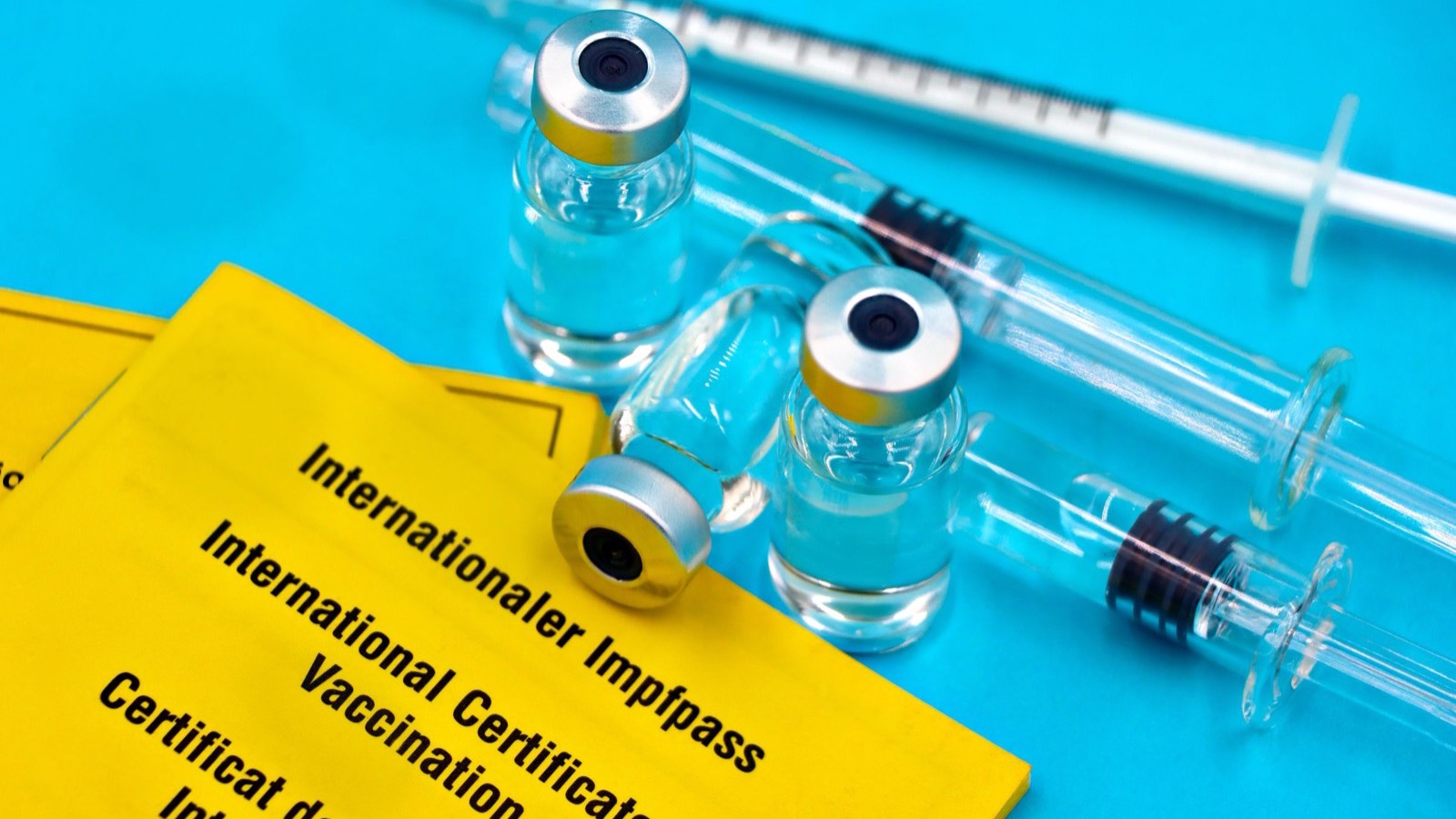
Start early. The US Centers for Disease Control and Prevention (CDC) Yellow Book says that “All recommended malaria chemoprophylaxis regimens involve taking a medicine before, during, and after travel” (CDC Yellow Book: malaria). It also says a yellow fever certificate, the International Certificate of Vaccination or Prophylaxis (ICVP), “is valid beginning 10 days after the date of primary vaccination” and is then valid for life (CDC Yellow Book: yellow fever).
This guide does not give medical advice. It repeats what the CDC Yellow Book, a reference written for health professionals, says, so that you know which questions to ask and when. Which vaccines or medicines suit you is for a doctor or travel health professional to decide. The CDC pages are dated 23 April 2025 and were checked in November 2026. The CDC is a US source; your own country’s health service may say something different.
Plan the appointments around your mobilisation date
Ask the employer which countries the posting covers and which health documents it requires, then book a travel health appointment well before you fly. Three timings in the CDC pages explain why:
| What | What the CDC says | Source |
|---|---|---|
| Malaria prevention | Regimens involve taking a medicine “before, during, and after travel” | CDC: malaria |
| Yellow fever certificate | Valid “beginning 10 days after the date of primary vaccination” | CDC: yellow fever |
| Live vaccines on different days | “should be administered at intervals of ≥28 days” if not given at the same time | CDC: general principles |
The CDC also says travellers “should be encouraged to complete full vaccine regimens before travel if feasible” (CDC: general principles). A booking made a few days before a rotation may leave too little time for this. The start date of any malaria medicine differs by medicine, so ask the clinic for the date that applies to what it prescribes.
The yellow fever certificate (ICVP)
The ICVP is the document border officials check. The CDC Yellow Book sets out what makes it valid (CDC: yellow fever):
- Lifetime validity. “A completed ICVP is considered valid for the lifetime of the vaccinee.”
- Start date. It is valid from 10 days after the first (primary) vaccination, so a flight inside those 10 days is a risk.
- Designated centre. Yellow fever vaccination “must be given at a designated center”, which has an official stamp.
- Signature. The provider must sign it by hand: “A signature stamp is not acceptable.”
Before you leave the clinic, check that the certificate has the centre’s stamp and a handwritten signature. Keep it with your passport, because you may need it at the border, not just at the clinic.
Entry rules at the destination
Not everyone needs a yellow fever certificate: it depends on the country you enter and sometimes on where you travelled before. The CDC says travellers without proof of vaccination or a medical waiver “could be denied entry, face mandatory quarantine (up to 6 days), or be required to receive a vaccine dose on site” (CDC: yellow fever).
The CDC adds that “it can be useful to check with the relevant embassy or consulate before departure” (CDC: yellow fever). Rotational workers who cross several borders, for example through a regional hub to a field camp, should check the rules for each country on the route, not only the final one.
Long postings of six months or more
The CDC defines long-term travellers as people “who travel for ≥6 months” (CDC: malaria). For them, the Yellow Book says:
- “Travelers should not count on being able to obtain safe, reliable malaria chemoprophylaxis medication abroad.”
- Travellers should “purchase enough medication to last them for the entire duration of their travel to malaria-endemic areas”.
- Travellers need a plan for getting care quickly when ill with fever, “including where to get tested and treated for malaria promptly”.
- Health professionals should “Advise travelers to purchase travel insurance, including contingencies for medical evacuation.”
On a remote site, the last two points are questions for the employer: ask who runs the site clinic, where malaria testing is available, and whether your employer’s cover includes medical evacuation. Get the answers in writing before you mobilise.
After you come home
The CDC says “all febrile persons returning from malaria-endemic areas should be tested for malaria even if they took chemoprophylaxis” (CDC: malaria). If you get a fever after a rotation in a malaria area, see a doctor and tell them where you have been, even if you took tablets the whole time. Rotation workers often fly home through several airports, so name every country on the trip.
For the separate fitness-to-work medical that offshore employers ask for, see offshore medicals in the UK, Norway and Australia.
Common mistakes
- Booking the clinic too late. Malaria regimens start before travel and the ICVP only counts from day 10 (CDC). Fix: book as soon as the posting is confirmed.
- Accepting a certificate with a stamped signature. The CDC says a signature stamp is not acceptable. Fix: check for a handwritten signature and the designated centre’s stamp.
- Checking only the final destination. Entry rules differ by country. Fix: check with the embassy or consulate of each country on your route.
- Planning to buy medicine on site. The CDC says long-term travellers should not count on finding safe, reliable medicine abroad. Fix: ask the prescriber about a supply for the whole stay.
- Ignoring a fever after the rotation. The CDC says returning travellers with fever should be tested for malaria even after taking prevention. Fix: see a doctor and give your travel history.
Frequently asked questions
Do I need a new yellow fever certificate for each posting?
The CDC Yellow Book says a completed ICVP is valid for the lifetime of the vaccinee. Keep the original with your passport. Whether a country asks to see it depends on that country’s entry rules, so check with its embassy or consulate.
Which malaria tablets should I take?
This guide cannot answer that. The CDC lists several regimens with different start dates, and the choice depends on the destination and your health. A doctor or travel health professional decides, so take your posting details and dates to the appointment.
Who pays for vaccines and site medical cover?
The CDC pages do not cover this; it depends on your contract. Ask the employer in writing which vaccines, medicines and insurance it pays for, and whether its cover includes medical evacuation, which the CDC advises travellers to have.
Are these rules the same in my home country?
Not necessarily. The CDC Yellow Book is a US reference for health professionals. Your national travel health service may give different advice, and the destination country sets its own entry rules.
Related
- Offshore medicals in the UK, Norway and Australia, for the fitness-to-work medical.
- Oil and gas jobs abroad for Indian engineers, for planning a first overseas posting.
- Oil and gas jobs in Nigeria and in Angola, for postings on this board.
This guide is general information, not legal advice. Rules and fees change. Check the official pages linked above before you apply.